
The Dwelling of the Light ( Book Review)
I have been attending an Anglican church for nearly two years now. Although I knew from the beginning that I was meant to be a part of this particular community, I never completely identified as "Anglican." I often find myself saying, “I’m Christian—not Protestant, Catholic, or even Anglican.” That being said, I continue to be confronted by my inherent Anglicanism. Reading Rowan Williams’ book, The Dwelling of the Light, was another nudge—or perhaps a confirmation—of this deep-seated affinity.
Rowan Williams, the former Archbishop of Canterbury, is the quintessential Anglican scholar-priest. He possesses a rare ability to bridge the gap between rigorous academic theology and the quiet, prayerful life of a believer. In this book, he approaches the world of icons not just as art history, but as a doorway into the presence of God.
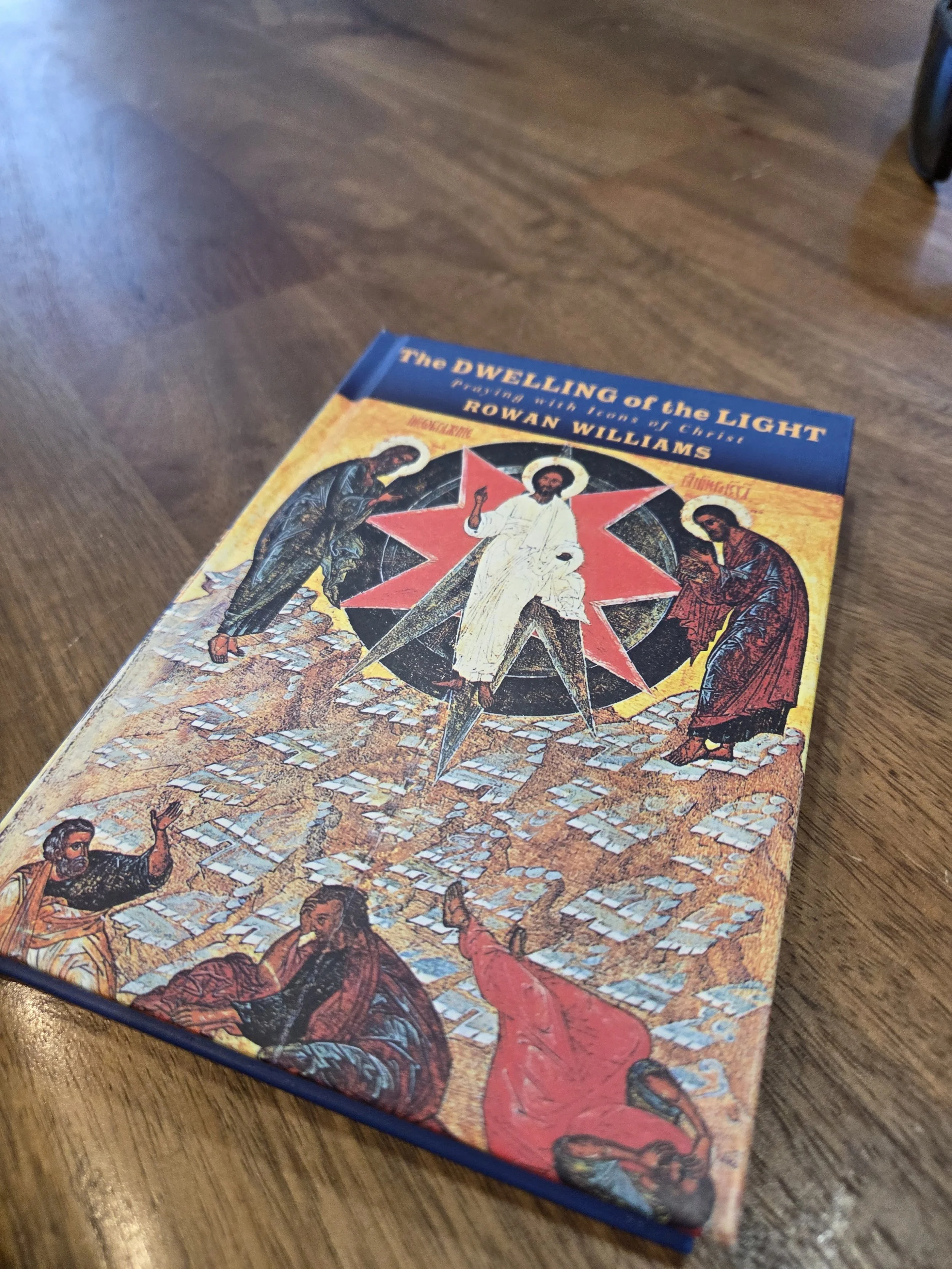 View Larger
The Hospitality of the Cloth
One of the first things I noticed is how accessible this book is. I’ve found this to be a recurring theme with books written by clergy; there is a certain "hospitality of the cloth" that permeates their writing. I found this to be especially true in James V. Schall’s The Order of Things. Like Schall, Williams treats the reader with a sense of welcome, as if the pursuit of truth is a shared journey rather than a lecture.
Williams begins by explaining the early Church’s hesitancy toward images, rooted in the Old Testament condemnation of idol worship. He traces how the Church gradually introduced them over time, culminating in the Eastern Church’s clear definition of image use. The key takeaway is that the early Church came to see the use of images as inherently Christian. This evolution is anchored in the defense found in St. John of Damascus’s On Divine Images. St. John argued that because the Word became flesh, matter has been sanctified. Since the invisible God became visible in Jesus, matter itself became more divine, allowing us to experience God with our senses.
Four Windows into the Divine
After a brief introduction, Williams focuses on four distinct icons. He chose these specific icons because they speak to the very nature of how images function in our faith.
 View Larger
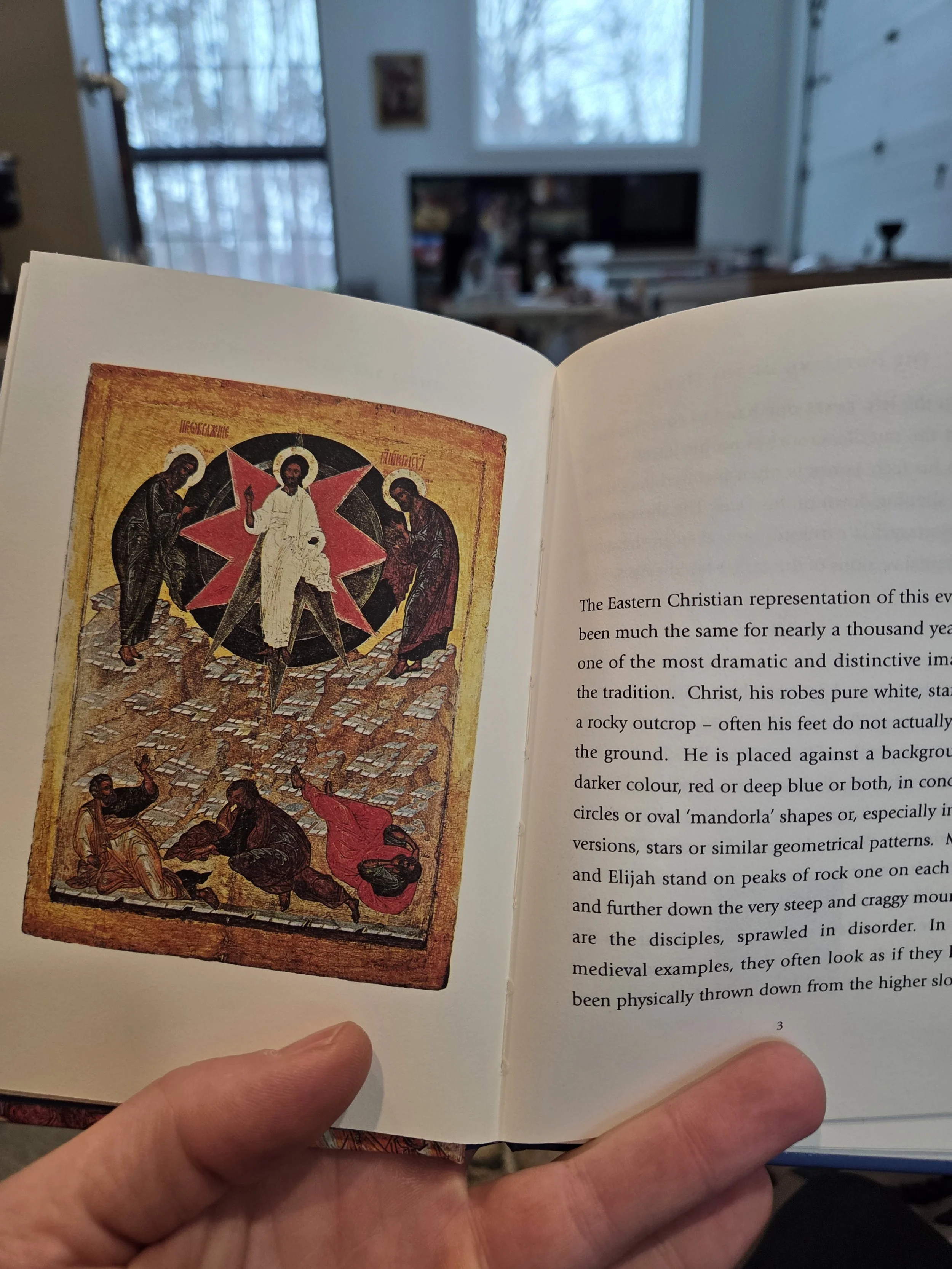
1. The Transfiguration: Williams explains that this icon depicts “Jesus coming out from an immeasurable depth.” The image helps us understand what Jesus is and where he comes from. He is a gift to mankind, the bridge that allows us to experience God. Without Jesus becoming man, we would be unable to experience God in His "Godly" form. As Williams beautifully puts it: “Belief in Jesus is seeing him as the gateway to an endless journey into God’s love.” This is often emphasized in icons through reverse perspective, where the vanishing point is not "inside" the painting, but rather located in the heart of the viewer, drawing us into the scene.
2. The Resurrection: Williams notes that theologians rightly argue that “the moment of the resurrection cannot be depicted any more than you could depict the moment of creation.” You cannot paint a picture of a simple act of God. Instead, the icon depicts the effect of God’s action: the great liberation. In this icon, Christ is often shown standing on the shattered doors of hell, reaching down to pull Adam and Eve out of the depths and into the light. Icons interpret divine concepts into human language so we can grasp the magnitude of God’s plan.
 View Larger
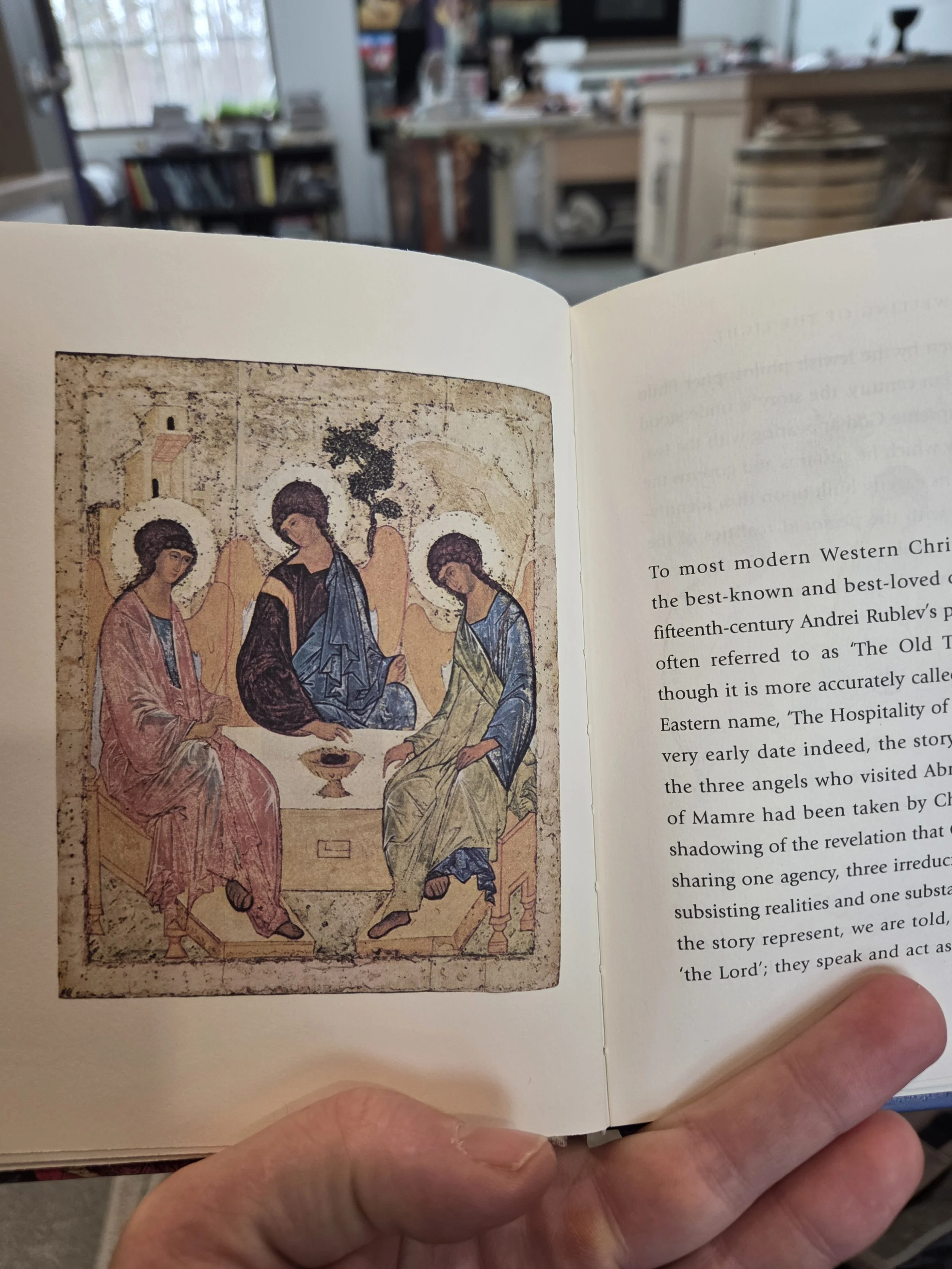
3. The Hospitality of Abraham (The Trinity): Probably the most recognized icon is Andrei Rublev’s "Old Testament Trinity." Williams explains that the justification comes from Genesis 18, where three mysterious travelers visit Abraham. Because the Bible describes this physical encounter, the Church uses that historical event as a way to "clothe" the mystery of the Trinity in human language. Through this image, we see how three distinct "hypostases" (persons) act as one, translating the mystery of the Trinity into a visual language of harmony.
 View Larger
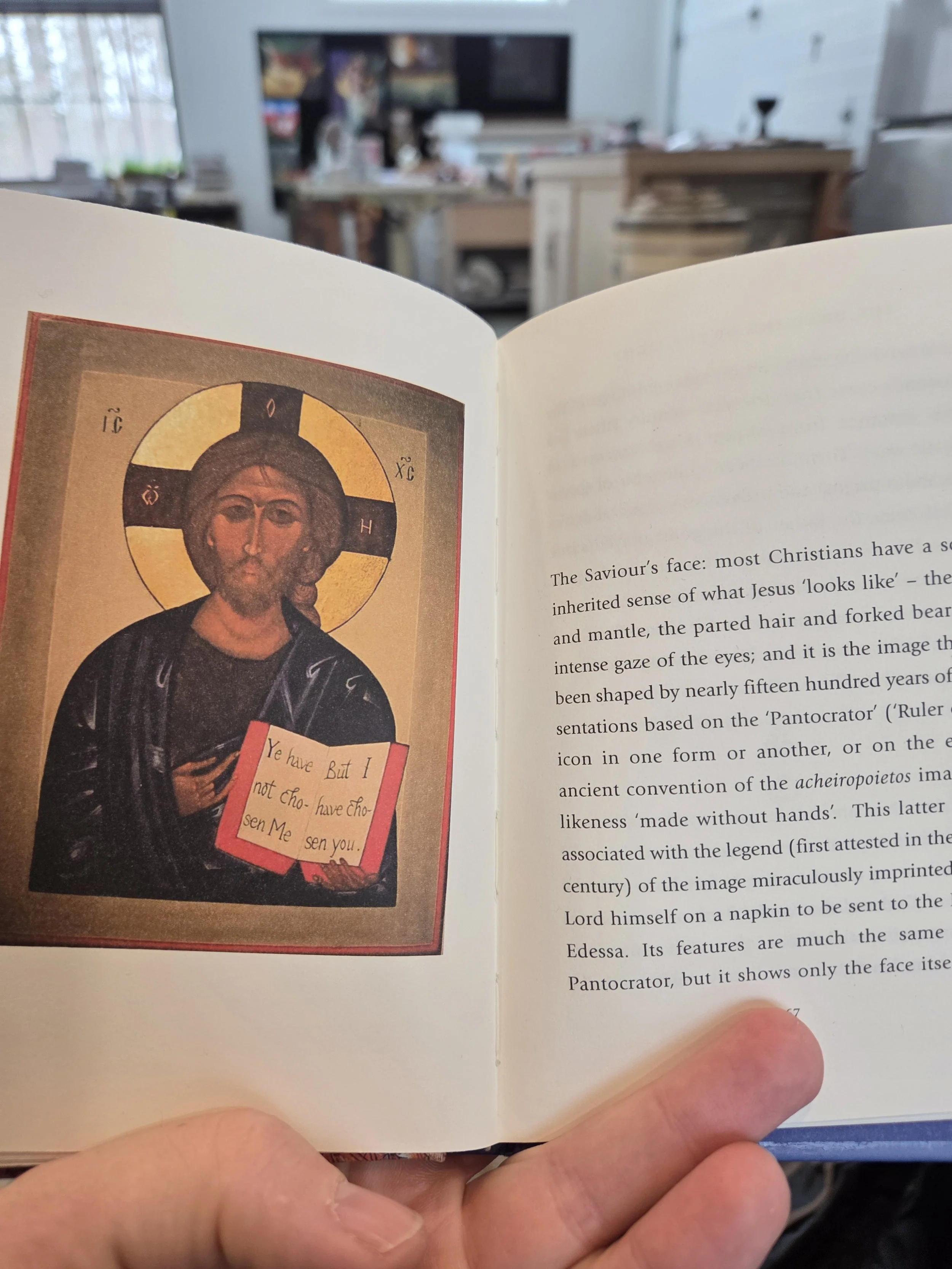
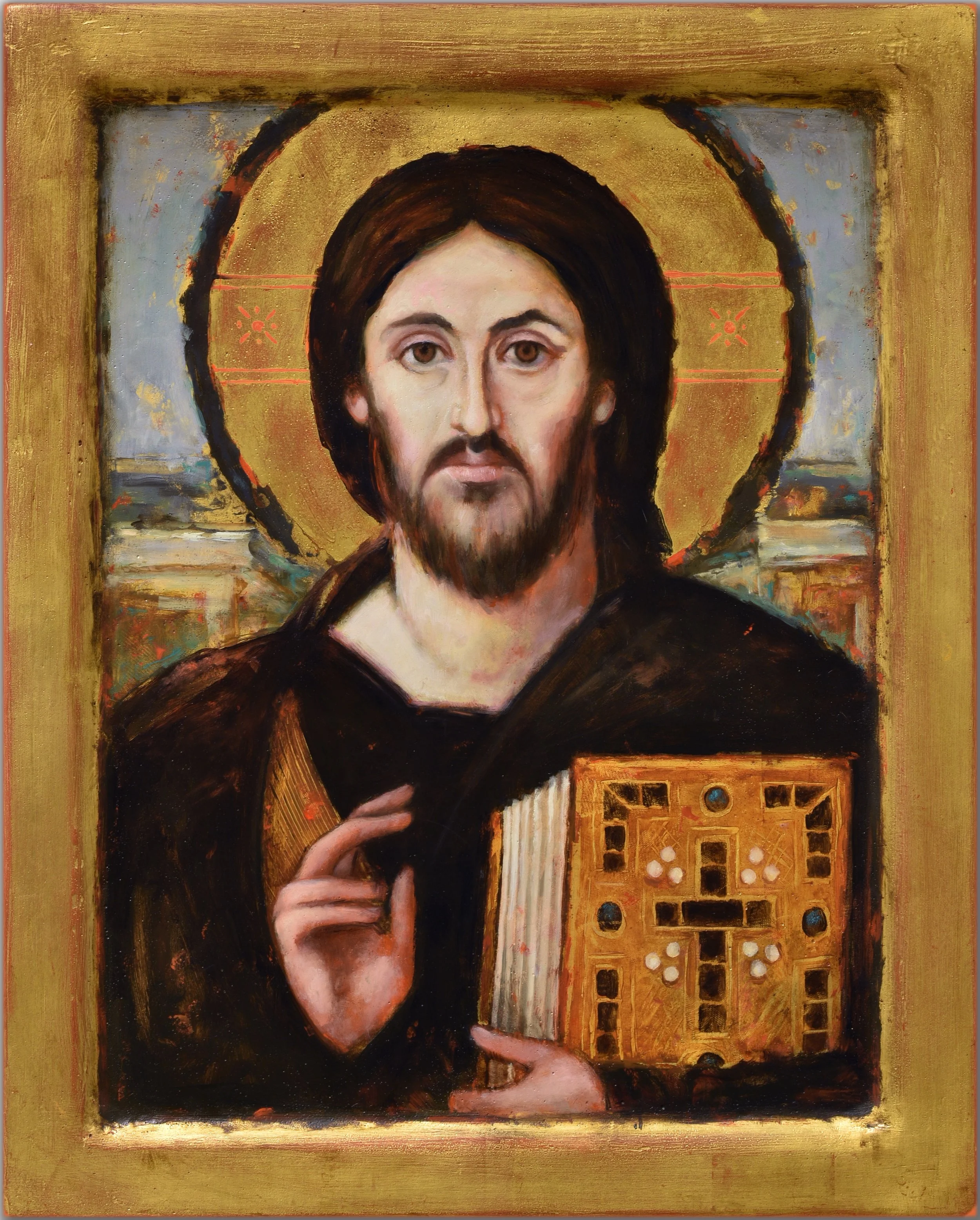
4. The Christ Pantocrator: Williams concludes with the Pantocrator, the "Ruler of All." This image of the face of Christ traces back to the 4th century. The Pantocrator shows us the recognizable, modest face of Jesus of Nazareth, yet it also conveys "Truth itself." Williams points out that the icon captures Jesus's deepest humanity and vulnerability while simultaneously showing Him “acting out the act of God.” This is often represented by subtle asymmetry: one side of Jesus’s face may appear stern or "Godly," while the other appears gentle and "human." While these qualities are hard to explain in words, they are immediately recognizable when you stand in the presence of the icon.
 View Gallery
Conclusion
While Williams goes into much more technical detail and deep explanation for each icon than I can cover here, his overall takeaway is clear: icons are profound because they give us a glimpse into the divine. He states that icons bring us “into the presence of the one who contains everything, who makes everything hang together, who gives us the power to see all things freshly.”
For me, the existence of icons is a manifestation of the Incarnation itself. By depicting the results of God becoming man, icons give us a window into something we are otherwise unable to look at directly. They are like polarized glasses that allow us to look toward the sun; without them, our understanding of God would be far less clear. Williams’ writing is a beautiful, concise reminder that:
“Nothing is more fundamental than Jesus, nothing will bring us closer to the heart of being itself than Jesus.”